
Warning: Attempt to read property "post_content" on null in /home/sqm3k42txutv/public_html/article/wp-content/plugins/custom-css-js/custom-css-js.php on line 203

Before They Book: 10 Accessibility Details Every Restaurant Should Publish Online

The accessible entrance and route into the restaurant

A practical guide for restaurant owners, operators, and diners seeking clearer, more reliable accessibility information.


For many diners, choosing a restaurant begins with the menu, location, price range, and reviews. For people with disabilities, the decision often starts with a different set of questions:

Can I enter safely? Will there be a table I can use? Is the restroom accessible? Can I bring my service animal? Will the staff understand what I need?

When this information is missing, diners may have to call the restaurant, search through dozens of online reviews, study photos, or rely on recommendations from friends and family. Even then, they may arrive and discover that the restaurant does not meet their needs.

Restaurants can reduce that uncertainty by publishing clear, specific accessibility information before guests book or visit.

This is not only about meeting legal requirements. It is about providing a better guest experience, building trust, and welcoming diners who may otherwise choose another restaurant.

DineAbiliti’s national survey found that 79% of surveyed diners with disabilities considered online reviews important when deciding where to eat. Yet only 23% frequently saw reviews containing accessibility information. The same research found that 88% were more interested in visiting restaurants that highlighted strong accessibility features and a welcoming attitude.

Here are 10 accessibility details every restaurant should publish online.

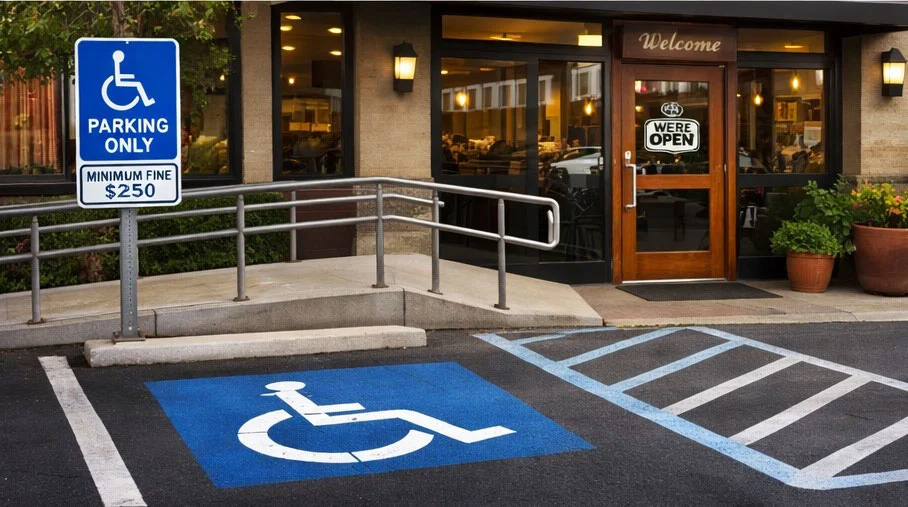
1. Accessible parking and drop-off information

Do not simply state that accessible parking is available. Explain where it is located and how guests get from the parking area to the entrance.

Helpful details may include:

  • Number and location of accessible parking spaces
  • Whether an access aisle is available
  • Distance from the parking space to the entrance
  • Availability of curb cuts
  • Location of a passenger drop-off area
  • Whether valet service can accommodate guests with disabilities

For restaurants in shopping centers or shared developments, clarify whether the parking is controlled by the restaurant or property owner. These details help guests evaluate the entire route, not just the restaurant entrance.

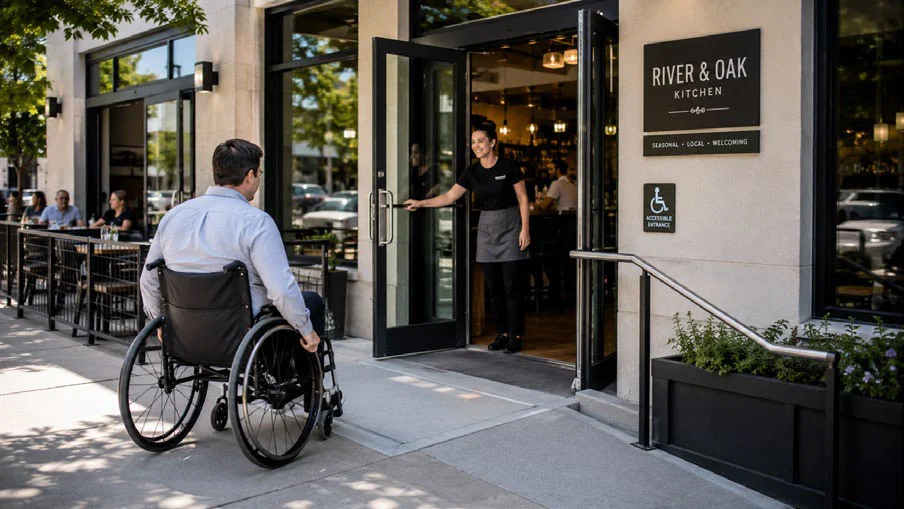
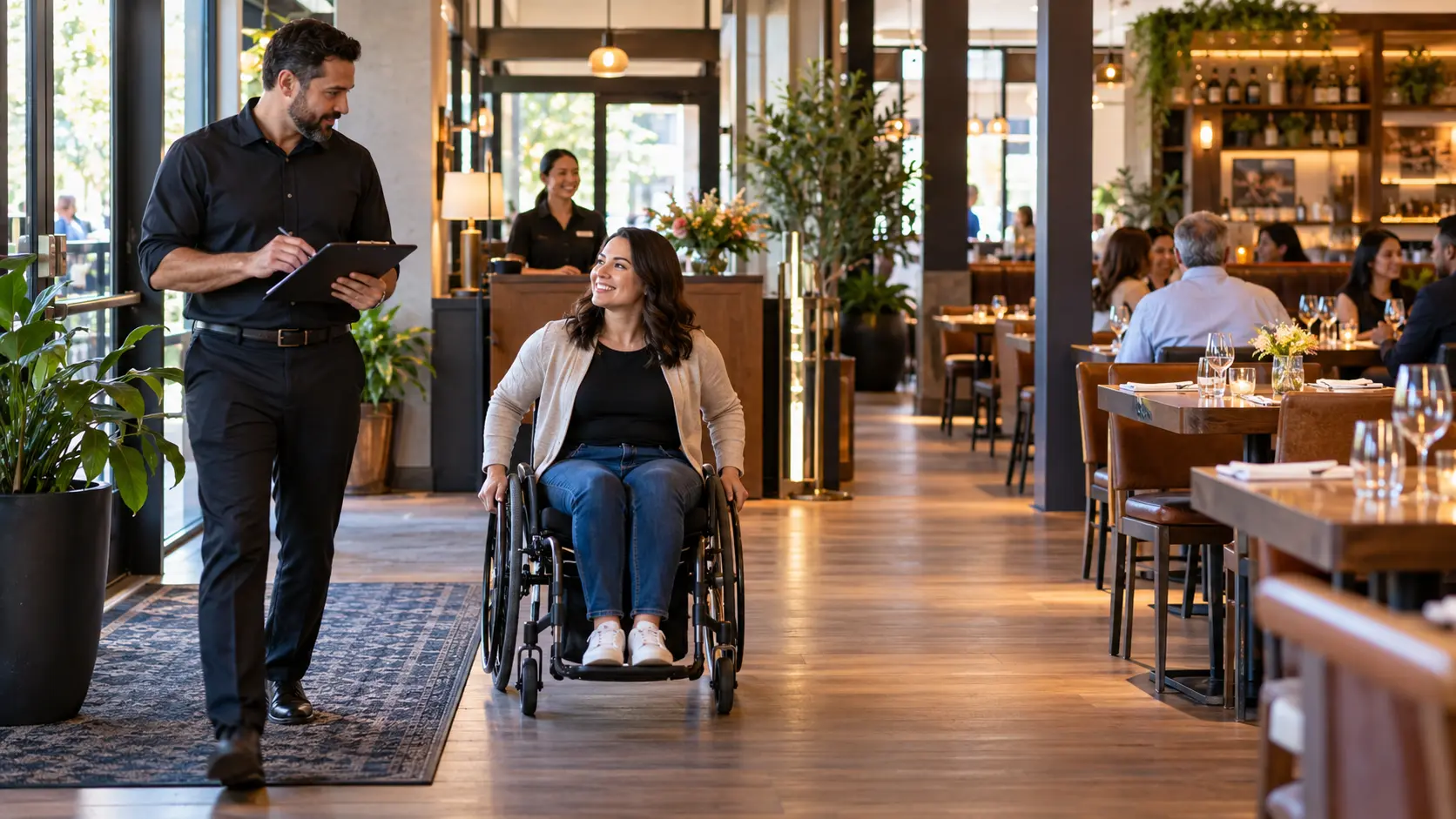
2. The accessible entrance and route into the restaurant

A restaurant may have a step-free entrance, but guests still need to know whether it is the main entrance, a side entrance, or an entrance that requires staff assistance.

Publish information such as:

  • Whether the entrance is step-free
  • Whether a ramp or lift is required
  • Whether doors are automatic or manually operated
  • Whether the doorway has a raised threshold
  • Whether someone must call ahead for assistance
  • Whether the accessible entrance is open during all business hours
The route should also remain clear. The ADA National Network recommends checking paths around ordering counters, self-service areas, seating, and other public spaces so diners using wheelchairs, mobility aids, or service animals have room to move.

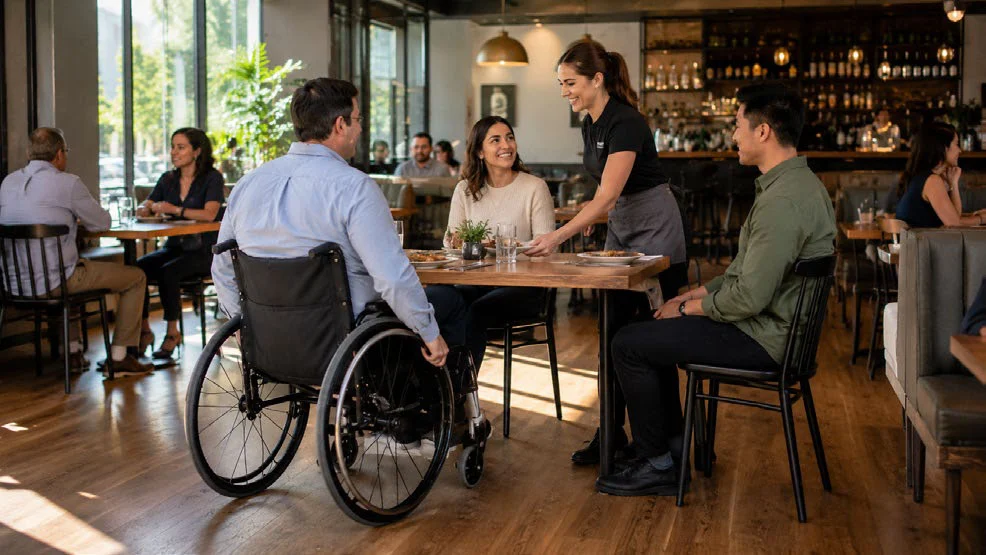
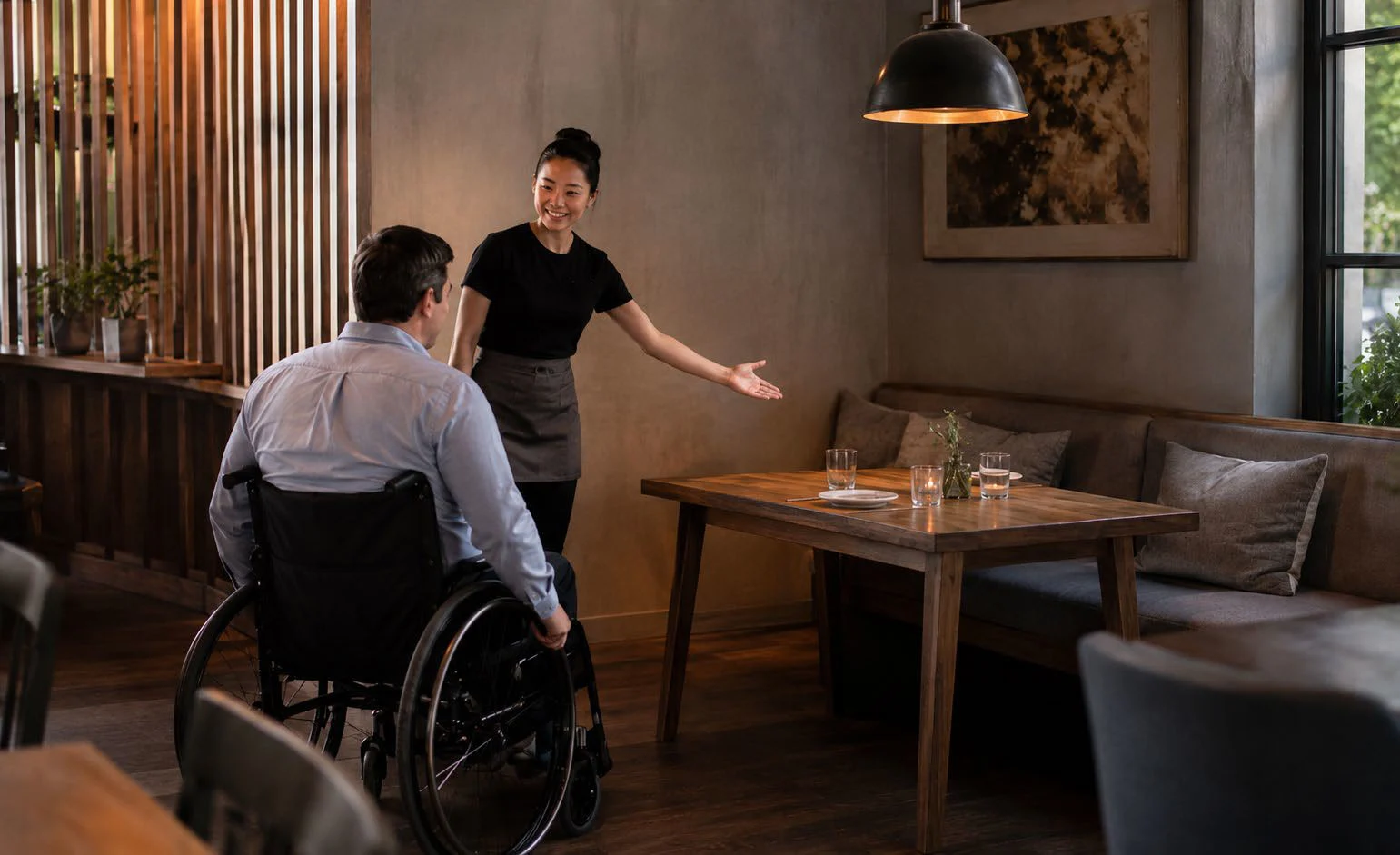
3. Accessible seating and table options

“Wheelchair accessible” does not tell a diner whether they will actually be able to sit comfortably with their party.

Describe the seating choices available, including:

  • Standard-height tables
  • Tables with adequate knee and toe clearance
  • Removable chairs for wheelchair or scooter users
  • Accessible booths, if available
  • Patio accessibility
  • Availability of armless chairs
  • Options for guests who cannot use high-top tables or stools

Accessible seating should be distributed throughout the dining area rather than limited to one undesirable location. Also explain how guests can request an appropriate table when making a reservation.

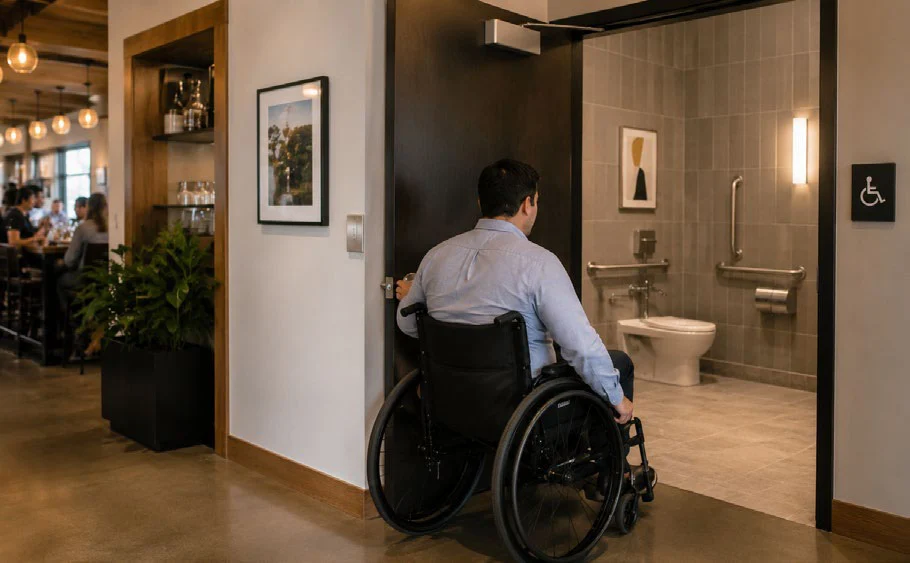
4. Restroom accessibility

Restrooms are among the most important and frequently overlooked parts of the dining experience.
In DineAbiliti’s survey, inaccessible restrooms were the most commonly reported specific dining barrier among respondents with disabilities.

Restaurants should disclose:

  • Whether an accessible restroom is available
  • Whether it is located on the same floor as the dining area
  • Whether the route is step-free
  • Whether the restroom is single-user or multi-stall
  • Whether grab bars and accessible sinks are available
  • Whether a changing table affects the accessible space
  • Whether guests must travel through a narrow hallway or service area

Most importantly, the accessible restroom must remain usable. It should never be treated as a storage area for cleaning supplies, highchairs, boxes, or equipment.

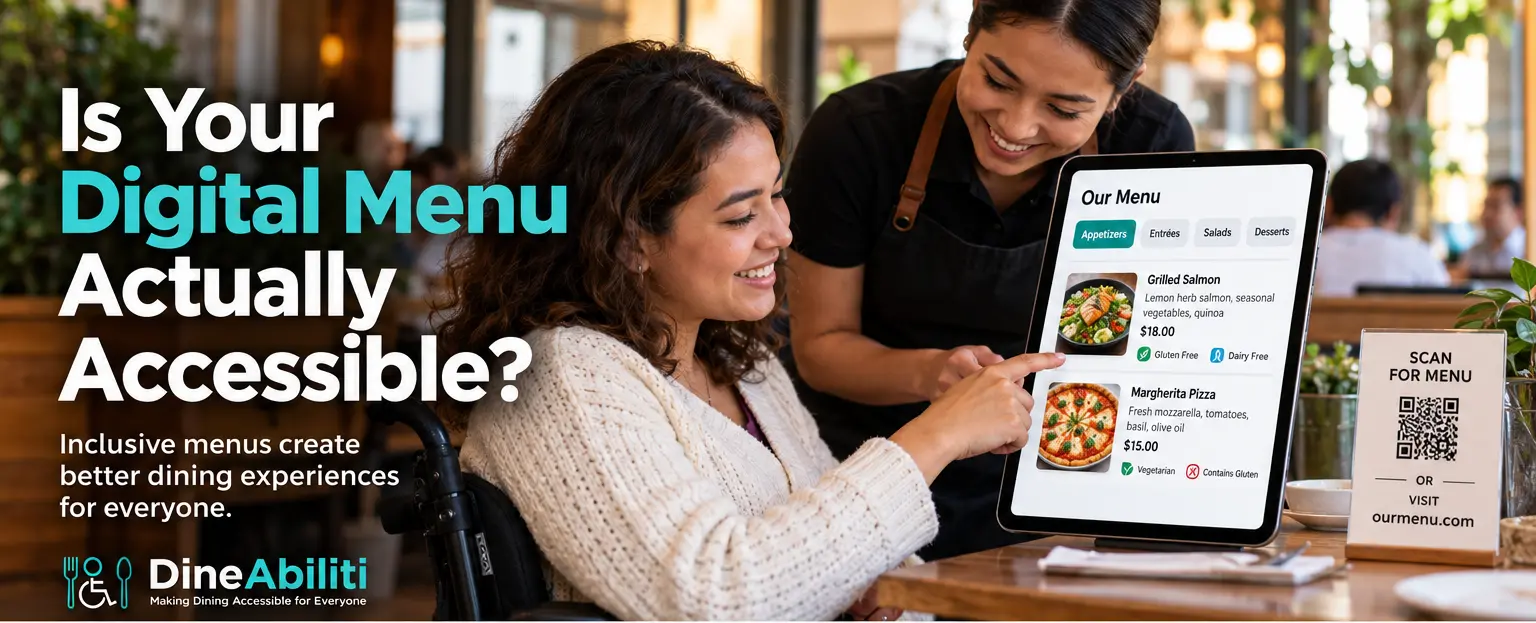
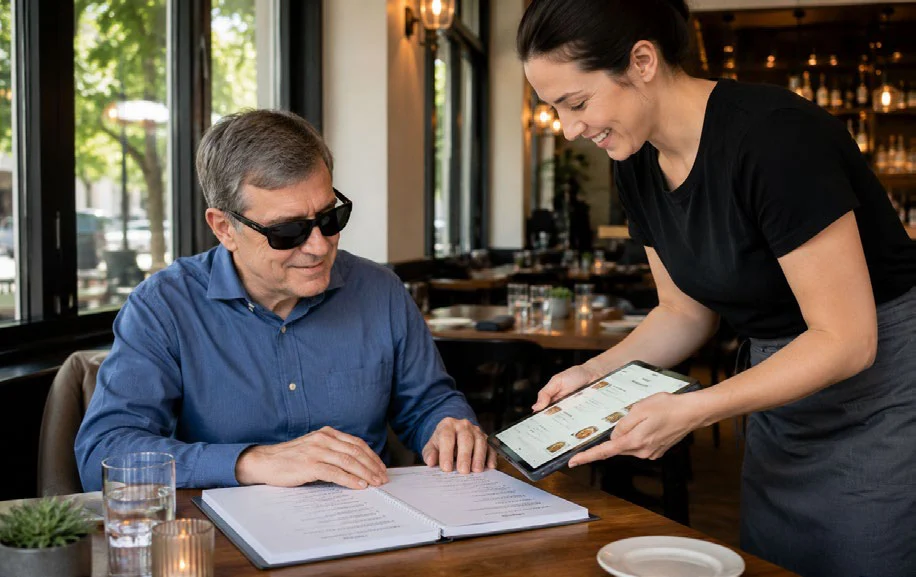
5. Accessible menus and ordering options

A menu can become a barrier when it is available only as small print, an image, or a QR code that does not work with assistive technology.
Restaurants should publish the menu in an accessible digital format and explain what alternatives are available.

Consider providing:

  • An HTML menu that can be read by screen readers
  • Large-print menus
  • High-contrast menus
  • text-based alternative to scanned PDFs
  • Printed menus for guests who cannot use a QR code
  • Staff assistance with reading or explaining menu items
  • Written ordering options for guests who are deaf or hard of hearing

The ADA National Network recommends large-print, high-contrast, non-glare menus and food labels. It also advises staff to offer assistance while asking the guest first and waiting for their direction.

6. Noise, lighting, and sensory conditions

Accessibility is not limited to mobility.

Restaurant noise, lighting, crowded layouts, and strong sensory stimulation can affect guests who are hard of hearing, have low vision, are autistic, experience migraines, or have other sensory needs.

Publish useful details such as:

  • Whether quieter seating is available
  • Which dining times are typically less crowded
  • Whether background music is played
  • Whether lighting is dim
  • Whether flashing or decorative lights are used
  • Whether outdoor seating offers a calmer environment
  • Whether guests may request a table away from speakers, bars, or kitchens

Restaurants do not need to promise a silent environment. Honest information allows diners to decide whether the setting will work for them.

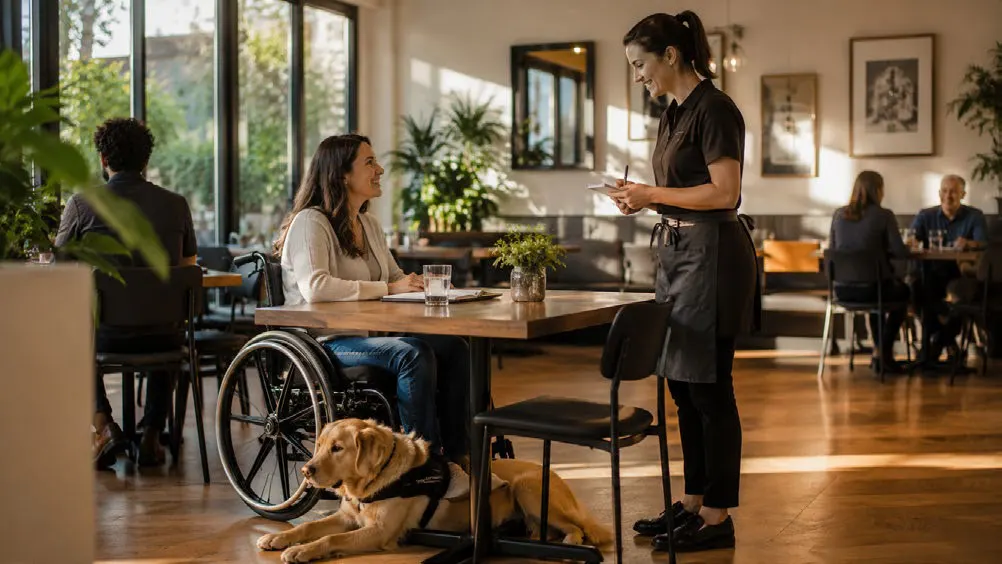
7. Service-animal policies and accommodations

A service animal is not the same as a pet, and a dog-friendly patio is not a substitute for service-animal access.

Restaurants should clearly state that trained service animals are welcome in all public areas where customers are normally permitted.

Staff should also understand that they may ask only two questions when the service the dog provides is not obvious:

  • Is the dog a service animal required because of a disability?
  • What work or task has the dog been trained to perform?

Restaurants should not require documentation, charge an additional fee, or force the handler to sit outside. Online information can also mention whether the restaurant can provide extra floor space near a table. Restaurants are generally not responsible for feeding, supervising, or caring for a service animal.

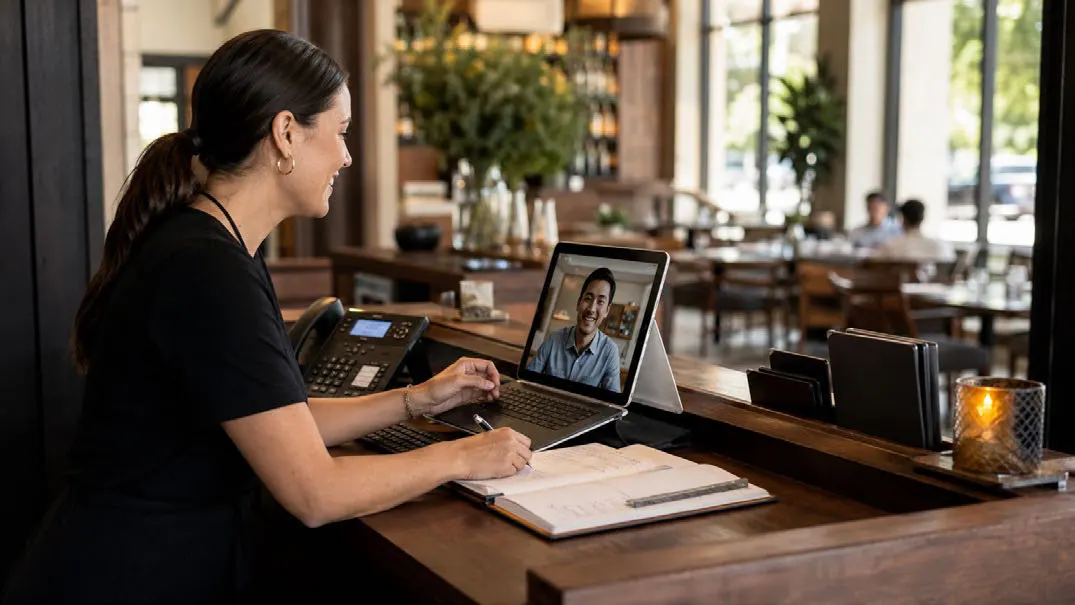
8. Reservation and accommodation requests

Give diners an easy way to communicate their needs before arrival.
A reservation form could include an optional question such as:

“Is there anything we can prepare to make your visit more comfortable or accessible?”

Guests might request:

  • Wheelchair-accessible seating
  • Space for a service animal
  • A table near the entrance or restroom
  • A quieter seating area
  • Extra time or support when ordering
  • Seating that avoids steps
  • Communication accommodations

The restaurant should confirm requests whenever possible. If a requested accommodation cannot be provided, tell the guest before they arrive and offer alternatives.

9. Self-service, buffet, and counter accessibility

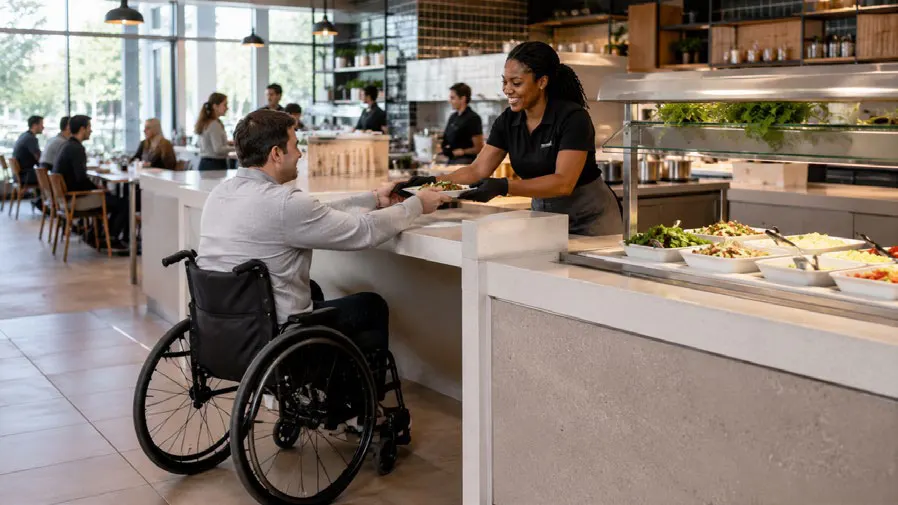
Restaurants with buffets, beverage stations, pickup shelves, or counter ordering should explain how guests can receive assistance.

Relevant information may include:

  • Height and accessibility of ordering counters
  • Whether staff can carry trays
  • Whether food labels are available
  • Whether buffet items can be described or served by staff
  • Whether pickup shelves are within reach
  • Whether accessible seating is available near the ordering area

The ADA National Network recommends placing self-service items where they can be seen and reached and posting signs that let guests know assistance is available.

10. A reliable contact for accessibility questions

Even a detailed website cannot answer every question.
Provide a phone number, email address, or reservation note field specifically for accessibility-related questions. Make sure the person responding understands the restaurant’s layout and available accommodations.

Avoid vague answers such as “We are ADA compliant.” Instead, answer the guest’s actual question:

  • The entrance is step-free.
  • The restroom is on the same floor.
  • We can remove a chair at a standard-height
    table.
  • The patio is accessible through the main
    dining room.
  • We do not have a Braille menu, but staff can
    read the menu and provide a digital version.

Specific information is more useful than a broad label.

Accessibility information builds confidence before the visit

A restaurant does not need to be perfect to communicate responsibly.
Honest, detailed information helps diners make informed choices and prevents disappointing experiences. It also helps restaurant teams prepare in advance rather than reacting after a guest arrives.
DineAbiliti’s research found that 54% of surveyed diners with disabilities had decided not to dine at or return to a restaurant because of accessibility challenges. Restaurants may never hear directly from many of those customers.
Publishing accessibility information gives restaurants an opportunity to show what they already do well, identify gaps, and demonstrate that every guest’s experience matters.

For diners, it replaces uncertainty with confidence.

For restaurants, it turns accessibility from an unanswered question into a visible part of hospitality.

For communities, it helps make dining more welcoming for everyone.

Start by reviewing the guest journey from parking to departure and publishing the details customers need before they book.

DineAbiliti’s Restaurant Accessibility Checklist provides a practical starting point for evaluating mobility access, menus, communication, service-animal practices, restrooms, and staff readiness.

Sources

  • DineAbiliti Restaurant Survey, commissioned by DineAbiliti and executed by Centiment, March 2025.
  •  ADA National Network, Food Service: Accommodating Diners with Disabilities.


Visit DineAbiliti.com to explore real accessibility reviews and dine out with confidence.

DineAbiliti Logo

Related Posts

Restaurant host preparing accessible seating for a diner using a wheelchair following a reservation request

The Accessible Reservation: How One Simple Question Can Improve the Dining Experience

Accessibility shouldn’t begin when a guest reaches the host stand. One simple reservation question can...
The accessible entrance and route into the restaurant

Before They Book: 10 Accessibility Details Every Restaurant Should Publish Online

A practical guide for restaurant owners, operators, and diners seeking clearer, more reliable accessibility information...

Going to a Restaurant Should Not Be a Gamble

That is the sentence I keep coming back to. Not as a policy position. Not...

Leave a Reply

Your email address will not be published. Required fields are marked *


Warning: Attempt to read property "post_content" on null in /home/sqm3k42txutv/public_html/article/wp-content/plugins/custom-css-js/custom-css-js.php on line 203