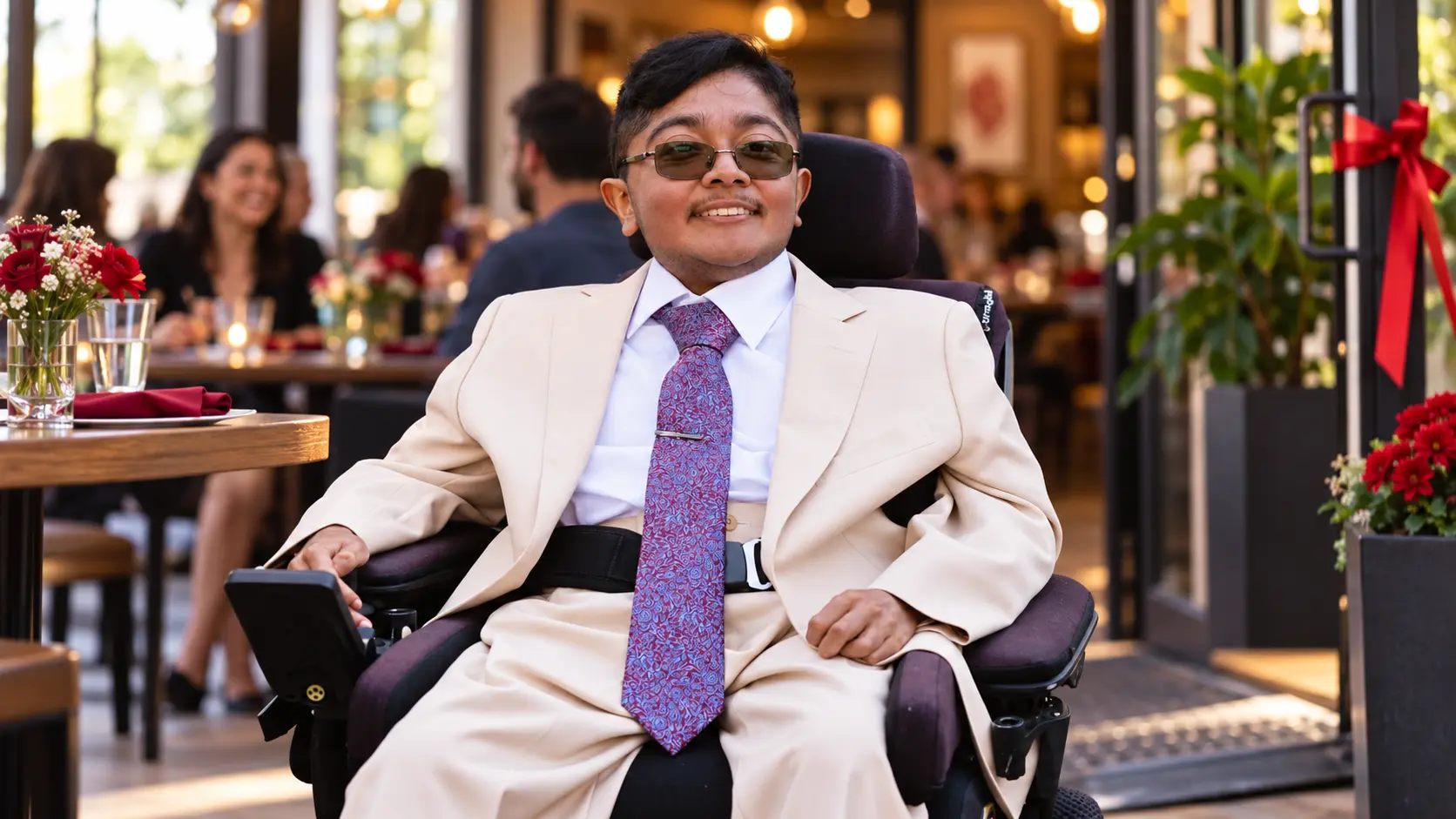
Going to a Restaurant Should Not Be a Gamble
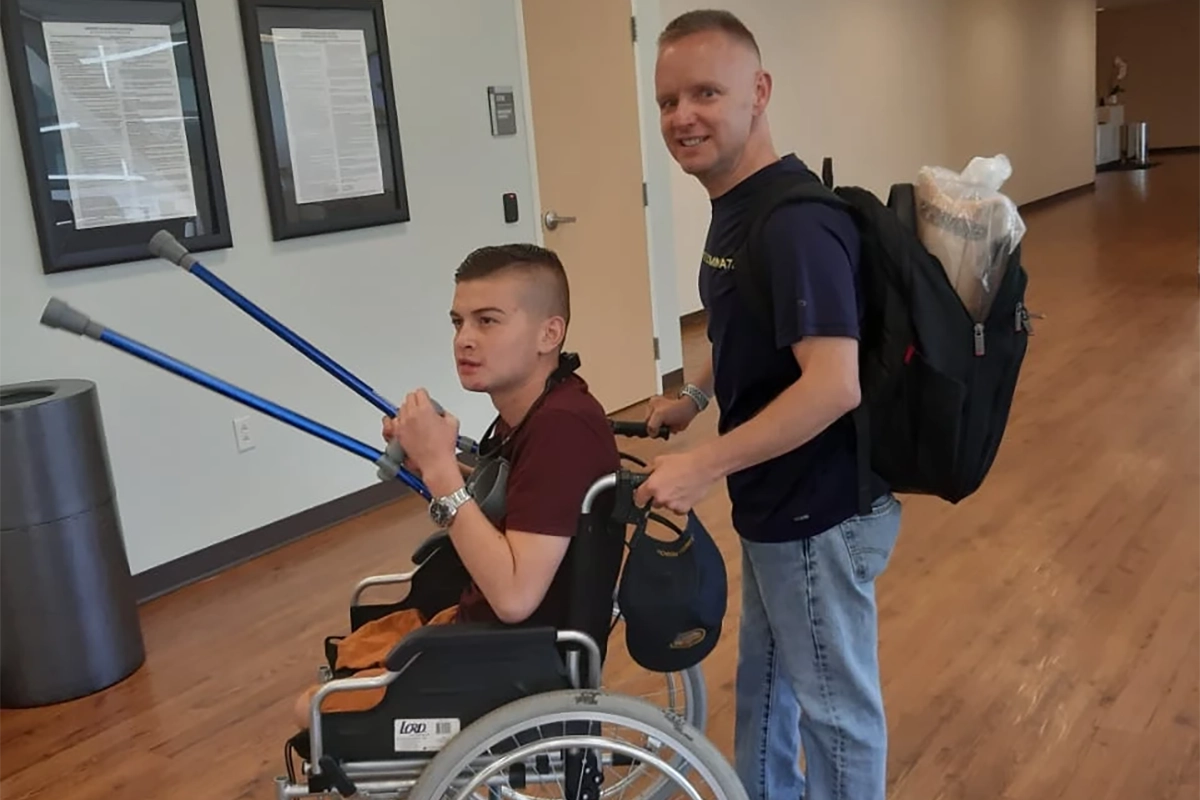
Guest post by Bobby Lucas
That is the sentence I keep coming back to. Not as a policy position. Not as a business pitch. As something I lived — across restaurant tables in Southern California, with one of the best friends I have ever made.
His name is Neider Parra Contreras.
The Ceremony
A few years ago, I was working in Bogotá, Colombia, when I attended a ceremony honoring members of the Colombian National Police. That is where I first met Neider.
He was young and carried himself with a quiet dignity that was impossible to miss. Months earlier, Neider had been on an antinarcotics mission deep in rural Nariño — one of the most dangerous corridors in Colombia — eradicating illegal coca crops in an active minefield. On the morning of February 26, 2019, a landmine detonated beneath him. Both of his legs were destroyed. Two fingers on his right hand were gone. Third-degree burns covered his back, his left hand, and his chin. He woke up two weeks later in a clinic in Cali, intubated and unable to speak.
His first instinct after the blast — before his mind could fully process what had happened to his body — was to reach for his weapon to help his teammates. His hands were too damaged to grip it.
At the ceremony that day, Neider and I found ourselves waiting for a group of people. In that moment, he told me he still wanted to serve. Still wanted to live fully. Those words resonated with me. I know what it is like to have dreams. I know what it is like to desire self-agency when the world seems to have made that decision for you.
A few colleagues and I connected him with Southern California medical volunteers. The rest followed from there. A month in Southern California. New prosthetic legs. A wheelchair. And a city full of restaurants.
The Tables
It was at those tables — after his medical appointments, over meals — where the friendship took root.
The two of us learned SoCal together. What streets worked. What doorways were wide enough. Which restaurants had thought about someone in a wheelchair — and which ones had not given it a single thought.
Some restaurants made room for us. Wide aisles. Accessible restrooms. Staff who treated Neider like a person who came to enjoy a meal, not a logistical inconvenience. We stayed at those places. We ordered more. We came back and brought people with us.
Others did not. A step at the entrance. A narrow doorway. A restroom at the end of a corridor no wheelchair could reach. We did not complain. We simply left. And we talked about it.
One of the restaurants that made room for us was Roscoe’s Chicken and Waffles in Anaheim. Thank you, Roscoe’s.

We stayed for hours. Laughed a lot. Talked about his family and mine — about what life looked like from where each of us was sitting, literally and otherwise.
The 2025 World Happiness Report studied more than 150,000 people across 142 countries and found that sharing meals with others predicts wellbeing as powerfully as income and employment — across every age, gender, and culture. The table is not just where people eat. It is where people belong.
At those tables, the question underneath every conversation was the same one Morgan Housel names better than anyone else:
“What have you experienced that I haven’t that makes you believe what you do? And would I think about the world like you do if I experienced what you have?” — Morgan Housel, Same as Ever (2023)
Sitting across from Neider, we both stopped asking that question and started living the answer.
The Resurgence
Neider and I talk regularly. Last year, he graduated with his bachelor’s degree in psychology. In August, he begins his master’s program.
Why psychology? Because sitting in his own therapy sessions during recovery, Neider found himself questioning how someone without comparable physical experience could ever truly understand another person’s pain. That question would not leave him alone. So he decided to spend his life finding the answer.
He is also a medal-winning competitive swimmer who represented the Colombian National Police at the Invictus Games in Germany 2023 and Canada 2025.
I am so proud of him.


Why DineAbiliti
The restaurants that made room for us in Southern California did something most people never think about: they changed the trajectory of a conversation, a friendship, and two lives. Not because they were extraordinary. Because they simply decided that everyone at the door was part of the plan.
That decision — so small from the inside, so large from the outside — is exactly what Sanjit and Rohit Krishnamurthy refused to stop thinking about.
One evening, their family arrived at a restaurant they had been looking forward to and stopped at the entrance. A couple of stairs. No ramp. No alternative. Their cousin, who uses a wheelchair, offered the kind of reassurance that should never have to be given: “It’s okay, this happens all the time.”
They knew it was not okay. So they went home and built something.
They were not software engineers. They taught themselves what they needed to learn. They built a platform from scratch — DineAbiliti — where people with disabilities, their families, and their caregivers can find, verify, and trust accessibility information before they ever walk through a door. It covers not just wheelchair access but blind accessibility, deaf accessibility, service animal policies, and staff attitudes — the full range of what “accessible” actually means. First-hand reviews. Real information. Real confidence.
What they built started as a refusal to accept one moment at one entrance for one cousin they love. It has since become a resource for strangers they will never meet.
Georgia is where this story continues. They said yes without knowing Neider’s story. Without knowing any of this. One of them is a high school student. The other is finishing his MBA at Wharton. Both said yes because the mission was plain enough to trust. And even inside their team, that thread runs the same direction — their Chief Accessibility Officer came to this work because of his brother, who lives with cerebral palsy.
That tells you everything about who they are. And it tells you why this partnership did not need a second conversation.
Neider never complained about the restaurants that turned him away. He just remembered which ones did.

Related Posts
The Five-Minute Restaurant Accessibility Walkthrough: See Your Restaurant Through a Guest’s Eyes
Is Your Digital Menu Actually Accessible? A Practical Guide for Restaurants