Access Changes Lives: How Tayjus Inspired DineAbiliti and a More Accessible Dining Experience

Tayjus Surampudi

World Duchenne Awareness Day 2026 • September 7

Every year on September 7, the global community comes together for World Duchenne Awareness Day, a day dedicated to increasing understanding of Duchenne muscular dystrophy and advocating for the people and families whose lives are shaped by it.

For World Duchenne Awareness Day 2026, the official theme is “Access Changes Lives.” The World Duchenne Organization describes access broadly: access to accurate information, diagnosis, multidisciplinary care, clinical trials, assistive technologies, community support, mobility, education, employment, travel, recreation, and participation in everyday life.

For DineAbiliti, that message is deeply personal.

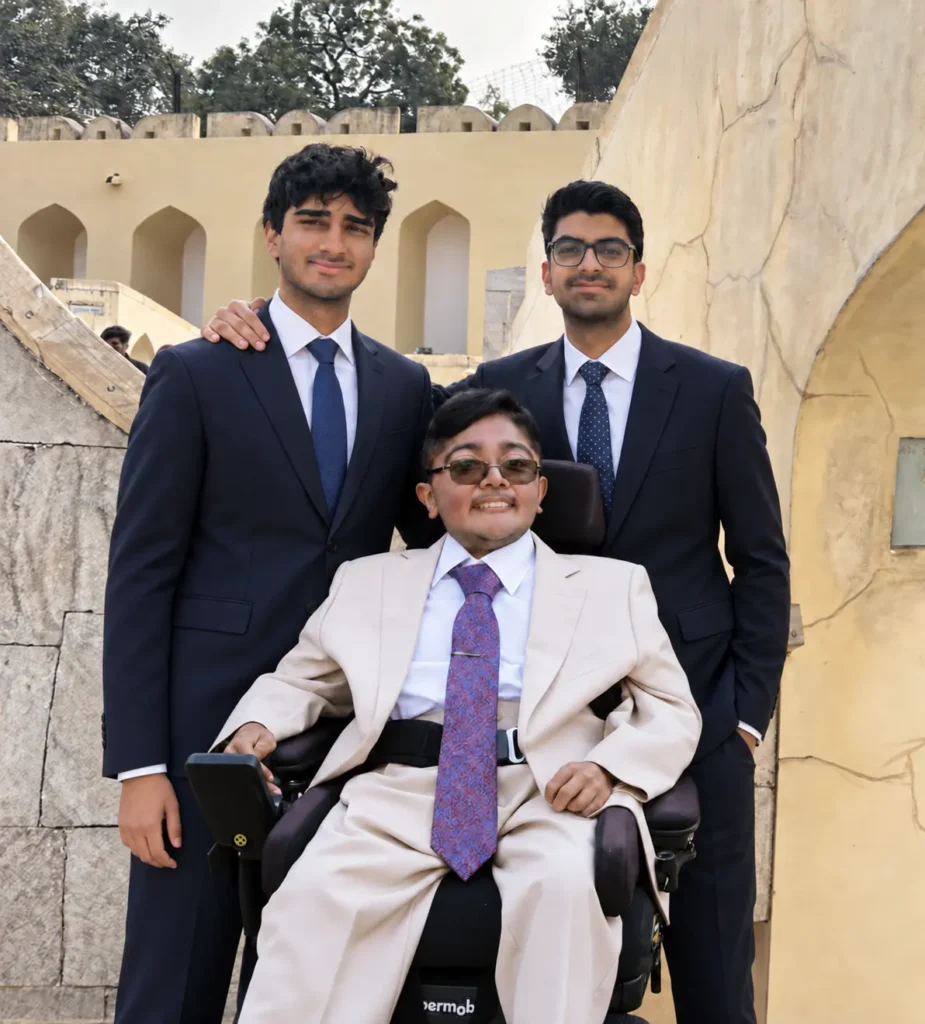
The inspiration behind DineAbiliti is Tayjus Surampudi, cousin of co-founders Sanjit and Rohit Krishnamurthy. Tayjus lives with Duchenne muscular dystrophy and uses a power wheelchair. His experiences helped the brothers see that accessibility is not an abstract concept or simply a matter of compliance. It determines whether someone can participate in the everyday moments many people take for granted – including sharing a meal with family and friends.

Tayjus Surampudi with DineAbiliti co-founders Sanjit and Rohit Krishnamurthy

What Is Duchenne Muscular Dystrophy?

Duchenne muscular dystrophy, often called DMD or Duchenne, is a rare genetic condition that causes progressive muscle weakness. Over time, Duchenne can affect mobility as well as heart and respiratory function.

World Duchenne Awareness Day exists to increase understanding of the condition while advocating for greater access to care, information, technology, and opportunities for people living with Duchenne. In 2026, the theme “Access Changes Lives” deliberately expands that conversation beyond healthcare. The official World Duchenne Awareness Day 2026 page emphasizes that people with Duchenne should have opportunities to participate fully in education, employment, travel, recreation, cultural activities, and social life.

That broader definition of access is central to Tayjus’s story.

Tayjus Has Been Writing About Access for Years

Long before DineAbiliti existed, Tayjus was exploring what accessibility means in real life.


As a 17-year-old preparing for college, he wrote about the importance of researching accessibility rather than assuming that a campus would meet a wheelchair user’s needs. In “Top Tips on Moving Out and Becoming a Student”, Tayjus encouraged students with disabilities to investigate accommodations, independent-living resources, and the physical accessibility of prospective campuses before making decisions.


Years later, Tayjus examined accessibility in another everyday activity: travel. In “How Airbnb is Trying Improving Travel for People with Disabilities”, he described a problem familiar to many wheelchair users: the word “accessible” can mean very different things to different people. A property without stairs may still have narrow doorways, an inaccessible bathroom, or no roll-in shower.


He followed that article by personally testing Airbnb’s accessibility filters in “I Tried Using Airbnb’s Accessibility Filters. Here’s What I Found”. His review found that even after selecting detailed accessibility criteria, some listings still did not clearly demonstrate that they actually met the selected needs.


That distinction – between an accessibility label and an actual accessible experience – would later become one of the core ideas behind DineAbiliti.

The Meal That Changed the Question

DineAbiliti did not begin with a business plan. It began with a family trying to go out for dinner.

Sanjit and Rohit describe arriving at a restaurant their family had been excited to visit, only to find stairs at the entrance and no usable ramp or alternative route for their cousin, who uses a wheelchair.


“It’s okay, this happens all the time.”


But to Sanjit and Rohit, it was not okay. What should have been a routine family dinner had become another example of how a small physical barrier could determine whether everyone could participate.


That moment became the foundation of DineAbiliti. The brothers began searching through restaurant reviews for the information their family actually needed: accessible entrances, restroom access, seating, pathways, service-animal experiences, and staff attitudes. Much of the information existed somewhere, but it was fragmented, difficult to locate, or reduced to vague labels. Read more about DineAbiliti’s mission and story.

How can we make it easier for people with disabilities to know what to expect before they arrive?

From Tayjus’s Experience to DineAbiliti

DineAbiliti was built around a simple insight: people with disabilities need more than an “accessible” icon. They need details.


DineAbiliti surfaces firsthand restaurant accessibility information so diners can better understand entrances, seating, restrooms, service-animal experiences, and staff attitudes before making a dining decision. Its mission is to help people with disabilities plan restaurant visits with greater confidence while helping restaurants understand how accessibility is actually experienced by their guests.


This is the same problem Tayjus identified in his earlier writing about travel: accessibility information is most useful when it is specific, verifiable, and connected to the real experience of the person who needs it. DineAbiliti explores this issue directly in “Why ‘Accessible’ Isn’t Always Accessible – and How DineAbiliti Fixes That.

Access Changes Lives Beyond Healthcare

The 2026 World Duchenne Awareness Day theme is especially meaningful because access is not limited to treatment. The World Duchenne Organization explicitly includes travel and social life among the areas where people living with Duchenne should have equal opportunities to participate.


Tayjus’s own experiences illustrate exactly what that can look like. In 2024, he wrote about traveling through Japan in a power wheelchair in “Discovering Japan in a Power Wheelchair: Tayjus’ Accessible Travel Journey”. He described accessible transportation, station staff prepared with ramps, wheelchair-accessible restrooms, accessible vans, and public systems designed so that wheelchair users could participate with less uncertainty.


He has also written about wheelchair-accessible transportation and how technology can make independent mobility easier. In “The Future of Wheelchair Accessible Transportation”, Tayjus examined how rideshare and autonomous-vehicle services could improve transportation access for people who use wheelchairs.


Across college, travel, transportation, and dining, the lesson is remarkably consistent: access changes whether people can participate independently and confidently.

What Tayjus’s Story Can Teach Restaurants

For restaurant owners and operators, Tayjus’s story provides a useful reminder: accessibility is experienced in details.
  • Can I reach the entrance from accessible parking?
  • Can my wheelchair move comfortably between tables?
  • Can I use the restroom?
  • Is there an appropriate table?
  • Can I communicate an accessibility need when making a reservation?
  • Will the staff know how to respond?

DineAbiliti’s national survey found that 56% of surveyed diners with disabilities encounter accessibility challenges at least sometimes when dining out. Approximately 54% said they had decided not to dine at or return to a restaurant because of accessibility challenges.


Restaurant owners can start by publishing the accessibility information diners need before visiting. Explore DineAbiliti’s restaurant accessibility articles.


They can also ask one simple question during the reservation process: “Is there anything we can prepare to make your visit more comfortable or accessible?”


Restaurants looking for a practical starting point can use the DineAbiliti Restaurant Accessibility Checklist to review mobility access, seating, restrooms, menus, communication, and staff readiness.


These steps are not simply about compliance. They communicate something much more important: You belong here.

World Duchenne Awareness Day 2026: A Call to Action

The 2026 World Duchenne Awareness Day message is simple: Access Changes Lives.

  • Access to healthcare changes lives.
  • Access to education changes lives.
  • Access to transportation and technology changes lives.
  • Access to travel changes lives.
  • And access to the ordinary experiences that connect us – like sharing dinner with family and friends – changes lives too.

DineAbiliti began because Tayjus and his family encountered a barrier on what should have been an ordinary evening. Today, that experience has become part of a broader mission: make reliable restaurant accessibility information easier to find, help restaurants understand the barriers diners actually experience, and make dining out less uncertain for people with disabilities.

On World Duchenne Awareness Day, DineAbiliti celebrates Tayjus, the Duchenne community, and everyone working to create a world where people are not expected to adapt their lives around unnecessary barriers.

“It’s okay. This happens all the time.”

Because access should not be an exception. It should be part of the experience.

Access changes lives. And accessible dining helps make everyday life more inclusive for everyone.

Learn more about World Duchenne Awareness Day 2026 and “Access Changes Lives”

Source Notes
  • World Duchenne Organization: World Duchenne Awareness Day 2026 – “Access Changes Lives.”
  • DineAbiliti About materials and pitch materials identifying Tayjus as the inspiration for DineAbiliti.
  • DineAbiliti National Restaurant Survey, commissioned by DineAbiliti and executed by Centiment, March 2025.
  • Tayjus Surampudi’s published accessibility writing on Disability Horizons, Medium, and Accessible Japan.

Related Posts

Tayjus Surampudi

Access Changes Lives: How Tayjus Inspired DineAbiliti and a More Accessible Dining Experience
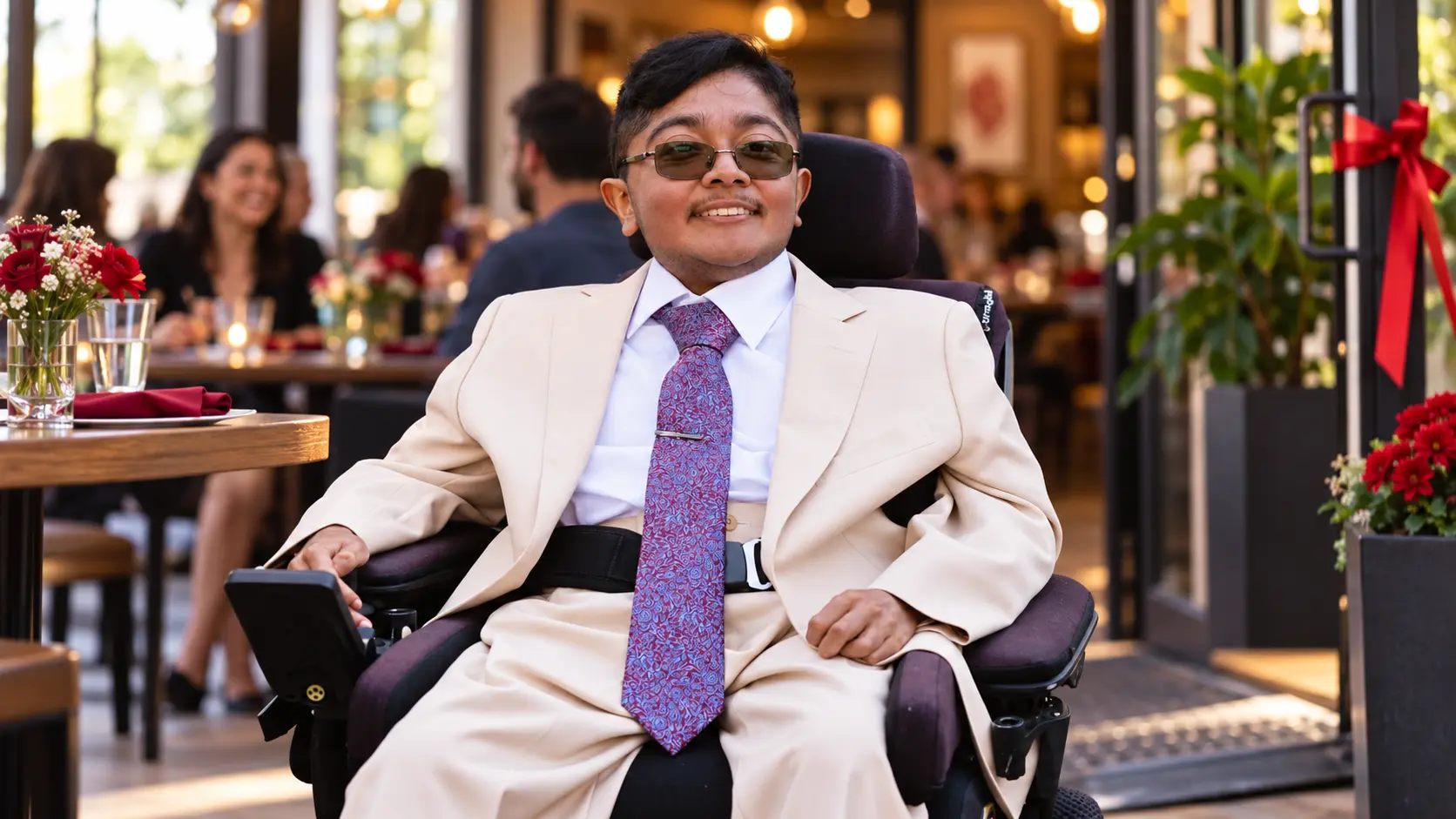
This World Duchenne Awareness Day, DineAbiliti celebrates Tayjus Surampudi, whose experiences living with Duchenne muscular...
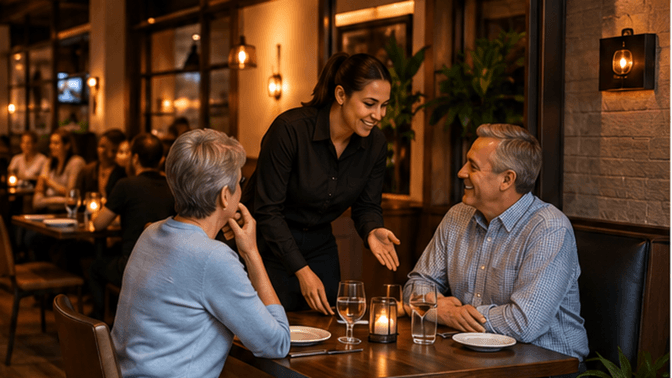
Diners having a comfortable conversation at a quieter restaurant table away from the busy bar and speakers.

The Hidden Barrier of Restaurant Noise: How Quieter Dining Can Improve Accessibility
Restaurant noise can be more than an atmosphere issue. For guests with hearing loss or...
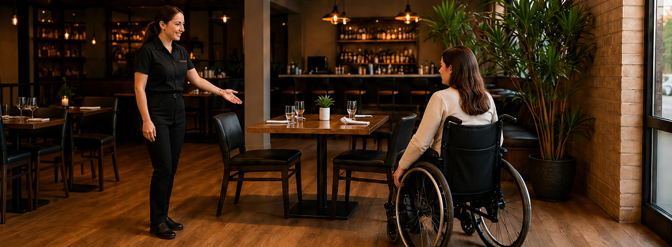
Restaurant host preparing accessible seating for a diner using a wheelchair following a reservation request

The Accessible Reservation: How One Simple Question Can Improve the Dining Experience

Accessibility shouldn’t begin when a guest reaches the host stand. One simple reservation question can...

Leave a Reply

Your email address will not be published. Required fields are marked *

Message from our Advertisers