12 Restaurant Accessibility Improvements That Can Make a Big Difference

Restaurant accessibility improvements hero image showing the number 12 and a welcoming accessible restaurant setting

12 restaurant accessibility improvements for a more welcoming restaurant.

Why Restaurant Accessibility Improvements Matter

Restaurant accessibility improvements do not always require a major renovation. For local and regional restaurant owners, that is good news.

Many restaurant accessibility improvements are small operational changes that cost little or nothing, yet they can make dining easier for guests with disabilities and smoother for staff.

A clearer route, a better table setup, a large-print menu, a quieter table, or a simple accommodation question can reduce friction and improve the guest experience.

That matters because accessibility influences whether people feel confident booking a table, comfortable during service, and willing to come back.

1. Keep Accessible Routes Clear During Service

A dining room can look accessible before opening, then become difficult to navigate once chairs are pulled out, highchairs appear, tray stands are added, or bags are placed beside tables.


One of the easiest restaurant accessibility improvements is to walk the route from the entrance to several tables and the restroom before service begins. Move anything that unnecessarily narrows the path.


This small habit helps wheelchair users, older adults, parents with strollers, and staff carrying trays.

2. Prepare Tables for Wheelchair and Service-Animal Accommodation

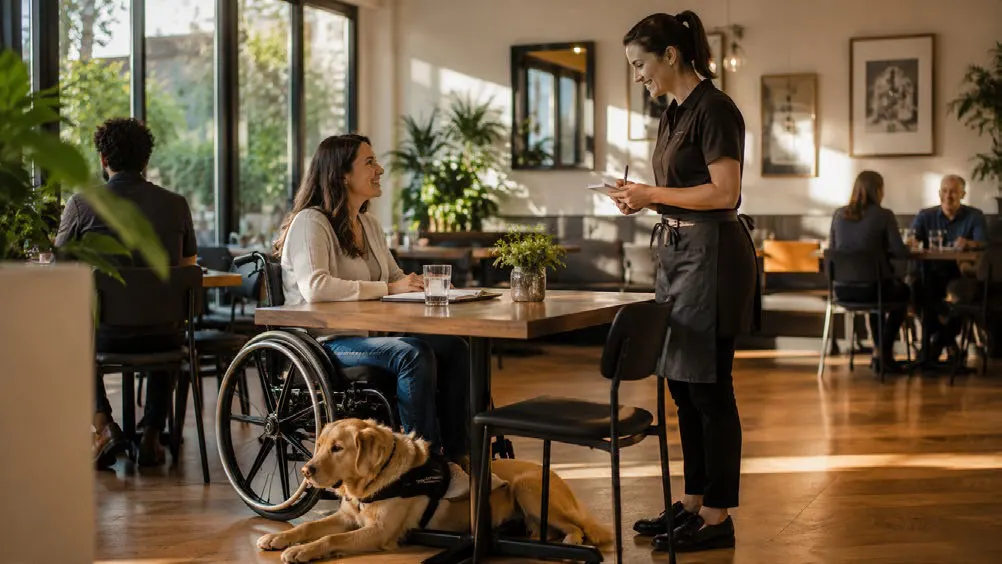
Not every table works equally well. Some tables are too high, some have pedestal bases that interfere with wheelchair positioning, and some leave no convenient space for a service animal.


Restaurant accessibility improvements should include identifying a few standard-height tables that work well, training hosts to recognize them, and making sure a chair can be removed easily when needed.


When a guest arrives, the goal is to seat the party naturally and comfortably, not create an awkward last-minute scramble.


Service animal policies and accommodations

Improvement #2: Prepare tables that comfortably accommodate both a wheelchair and a service animal.

3. Keep Accessible Restrooms Usable

An accessible restroom can become inaccessible when boxes, cleaning equipment, highchairs, or extra supplies migrate into the clear floor space.


A quick restroom check at opening or before the dinner rush is one of the most practical restaurant accessibility improvements because it addresses a major barrier without any construction work.


Pay attention to the path to the restroom, the door, the stall area, and the sink approach.

4. Offer Multiple Accessible Menu Options

Menus are a major part of the dining experience, and they should be usable in more than one format.


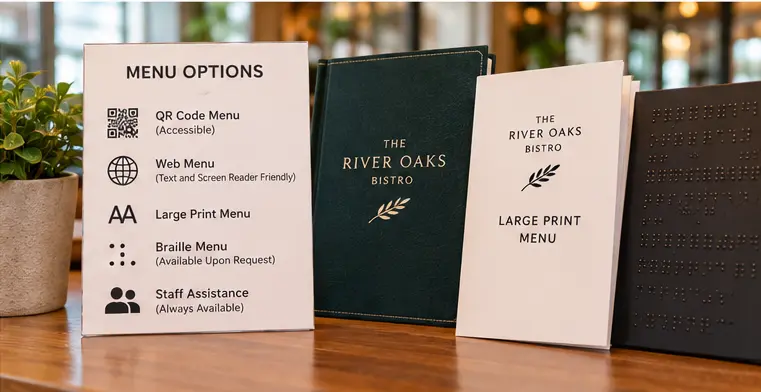
Good restaurant accessibility improvements include keeping a printed menu available, offering a large-print version, providing a digital menu that works with screen readers, and making sure guests are not forced to rely only on a QR code.


For a deeper dive, see Is Your Digital Menu Actually Accessible?


Restaurant display offering QR, screen-reader-friendly web, large-print, Braille, and staff-assisted menu options

Improvement #4: Offer multiple accessible menu formats instead of relying on only one option.

5. Publish Clear Accessibility Information Online

Many diners want to know the basics before they arrive. They may need to know whether the entrance is step-free, whether accessible parking is nearby, whether standard-height tables are available, or whether there is an accessible restroom.


Publishing those details online is one of the most valuable restaurant accessibility improvements because it reduces uncertainty for diners and repeat phone calls for staff.


For more on what to publish, see Before They Book: 10 Accessibility Details Every Restaurant Should Publish Online.

6. Let Guests Share Accessibility Needs During Reservations

A reservation creates time to prepare. A simple optional prompt such as “Is there anything we can prepare to make your visit more comfortable or accessible?” can make a big difference.


Restaurant accessibility improvements are often most effective when the team knows what the guest needs before arrival. That may include a quieter table, extra space for a service animal, or a seat near the entrance.


DineAbiliti explores this in The Accessible Reservation.

7. Identify Quieter Seating and Reduce Unnecessary Noise

Restaurant noise can affect guests who are hard of hearing, autistic, neurodivergent, or simply trying to have a conversation.


One of the easiest restaurant accessibility improvements is to identify a few tables away from speakers, televisions, the bar, kitchen doors, or crowded traffic areas. During peak service, lowering music slightly may also help.


For more on this topic, see The Hidden Barrier of Restaurant Noise.


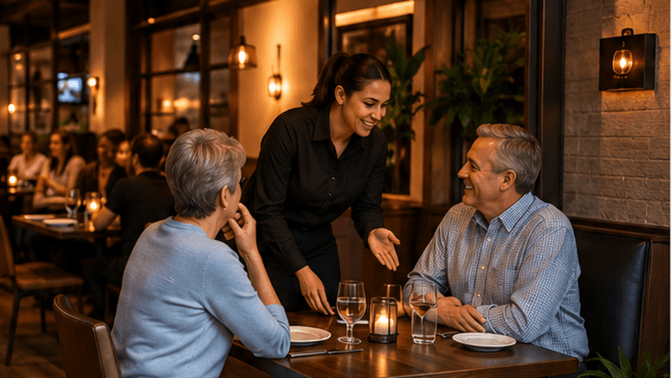
Diners having a comfortable conversation at a quieter restaurant table away from the busy bar and speakers.

Improvement #7: Identify quieter seating areas and reduce unnecessary background noise.

8. Train Staff to Ask Before Helping

Good intentions do not always lead to good service. Staff should not assume what help a guest wants or needs.


A simple phrase such as “How can I help?” is often enough. Restaurant accessibility improvements should include short, practical staff reminders so assistance is respectful rather than intrusive.


The ADA National Network recommends asking first and waiting for the guest’s response or direction before providing help.

9. Make Service-Animal Expectations Clear

Service-animal misunderstandings can create unnecessary tension. Staff should understand that service animals generally may accompany people with disabilities in areas where customers are normally allowed.


Restaurant accessibility improvements in this area may be as simple as a short training reminder and a consistent policy so guests do not receive mixed messages from different employees.

10. Make Payment and Checkout Flexible

Accessibility should continue through the end of the visit. Can a payment terminal be moved within reach? Is the screen readable? Can a guest complete the transaction without unnecessary strain?


Restaurant accessibility improvements are not only about entry and seating. The final moments of the experience matter too.

11. Do a Quick Pre-Shift Accessibility Check

Many small barriers are created by day-to-day operations rather than by the building itself. That is why a quick pre-shift check can be valuable.


Look at routes, tables, restrooms, menus, and noise sources. Restaurant accessibility improvements are easier to sustain when the team treats them as part of normal service readiness.

12. Use a Five-Minute Accessibility Walkthrough

A five-minute walkthrough is one of the best ways to find low-cost barriers. Start at the parking area and follow the guest route through entrance, host stand, table, menu, restroom, payment, and exit.


This is one of the most useful restaurant accessibility improvements because it helps owners and managers experience the restaurant the way a first-time guest would.


For a full walkthrough guide, see The Five-Minute Restaurant Accessibility Walkthrough.


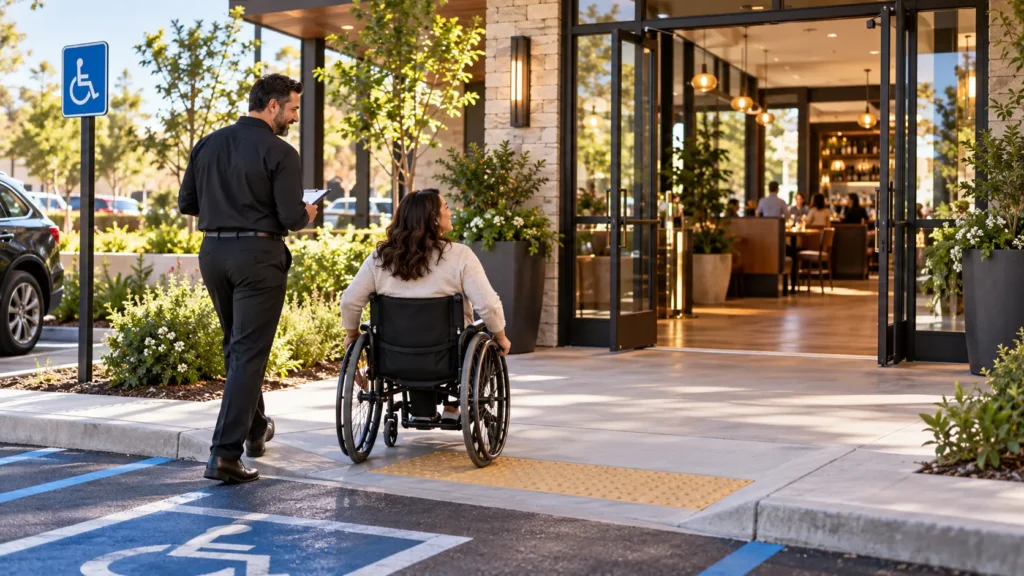
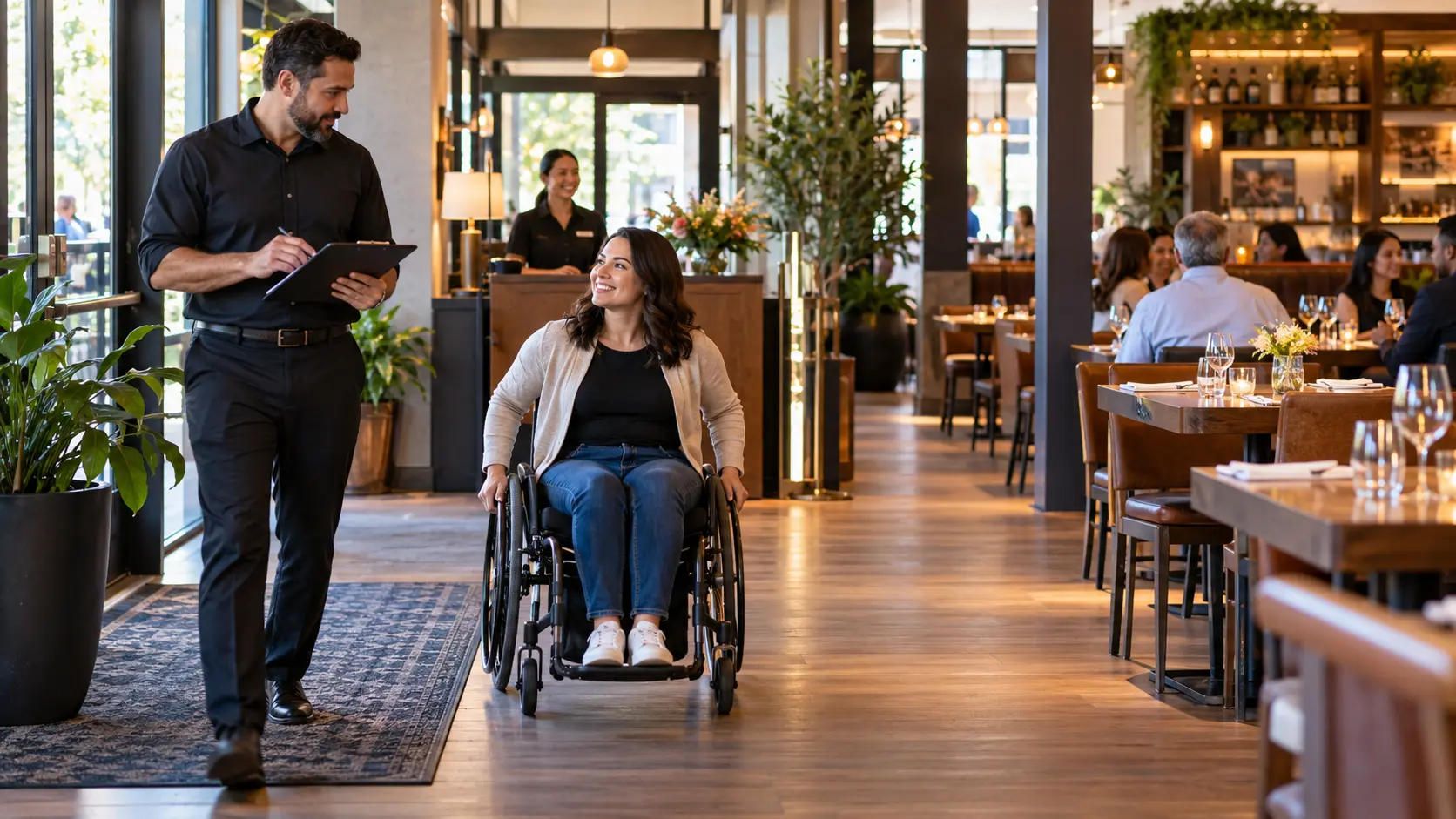
Restaurant accessibility walkthrough beginning at accessible parking and a step-free entrance with a wheelchair user approaching the restaurant.
Improvement #12: Use a five-minute walkthrough to spot barriers from parking to the front door.

Start With the Restaurant Accessibility Improvements You Control Today

Some accessibility barriers require construction, permits, landlord coordination, or significant investment. Those challenges should not be minimized.


But many restaurant accessibility improvements can begin today. Clear the route. Prepare the right tables. Keep the restroom usable. Offer readable menus. Identify quieter seating. Train staff to ask, not assume.


For the restaurant, these may feel like small adjustments. For the guest who needs them, they can shape the entire dining experience.


That is why small accessibility improvements matter.


For practical external guidance on dining-related accessibility, review the ADA National Network Food Service guidance.


DineAbiliti Logo


Related Posts

Restaurant accessibility improvements hero image showing the number 12 and a welcoming accessible restaurant setting

12 Restaurant Accessibility Improvements That Can Make a Big Difference
Restaurant accessibility improvements do not always require a renovation. These 12 practical changes can help...
Restaurant manager conducting a restaurant accessibility walkthrough while a wheelchair user moves along a clear route through the dining room.

The Five-Minute Restaurant Accessibility Walkthrough: See Your Restaurant Through a Guest’s Eyes

You know your restaurant by heart, but a first-time guest does not. This five-minute restaurant...
Wheelchair user reviewing an accessible digital restaurant menu with a server; menu prices are displayed in U.S. dollars.

Is Your Digital Menu Actually Accessible? A Practical Guide for Restaurants
A digital menu should make ordering easier, not create another barrier. Learn how restaurants can...

Leave a Reply

Your email address will not be published. Required fields are marked *

Message from our Advertisers