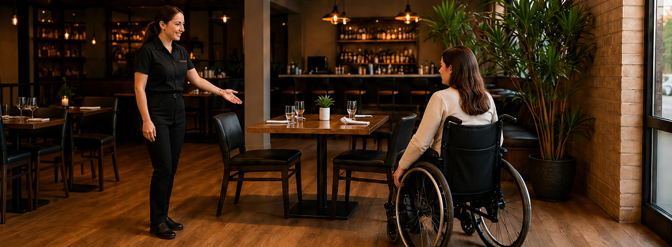
The Hidden Barrier of Restaurant Noise: How Quieter Dining Can Improve Accessibility
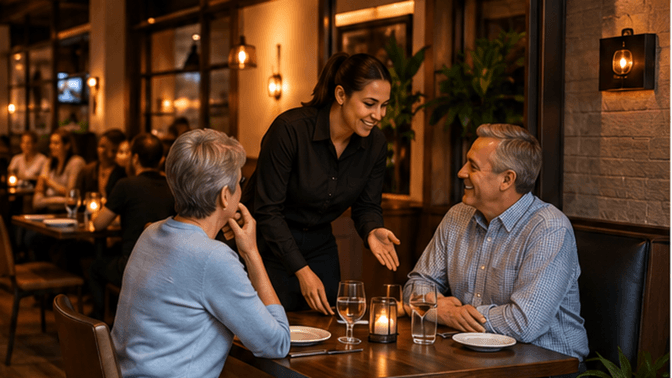
A practical guide for restaurant owners, operators, managers, and diners
A restaurant can have a step-free entrance, accessible tables, and an accessible restroom and still present a barrier many guests cannot see: noise.
A busy dining room can feel energetic and inviting. But when music, conversations, dishes, televisions, and service noise compete with one another, some guests may struggle to hear the server, follow a conversation, or stay comfortable through the meal.
For restaurant owners and operators, that can become a guest-satisfaction problem and a repeat-business problem before anyone on the team realizes something went wrong.
The goal is not to make every table quiet. It is to know where your quieter options are, reduce unnecessary noise, and make those options easy to request.
Why Restaurant Noise Is an Accessibility Issue
Dining out is social. Guests come to restaurants not only for food, but also to talk with family, friends, coworkers, and clients. When background noise makes speech difficult to understand, an important part of the experience disappears.
Research on real-world restaurant settings shows that background noise can reduce speech intelligibility, particularly when multiple conversations and sound sources overlap. For people who are deaf or hard of hearing, the challenge can be even greater.
Noise can also affect autistic and neurodivergent diners and people with sensory sensitivities. Autism Speaks recommends reducing unnecessary music and noise and reserving tables in quieter parts of restaurants when possible.
The Accessibility Problem Restaurant Staff May Never See
A couple finishes dinner and tells the server the food was excellent. What they do not say is that one diner spent much of the meal asking “What?” and eventually stopped participating in the conversation.
The server sees a satisfied table. The guest remembers an exhausting experience – and doesn’t return.
DineAbiliti’s national survey did not specifically measure restaurant noise, but it shows the larger consequence of accessibility barriers: approximately 54% of surveyed diners with disabilities said they had decided not to dine at, or return to, a restaurant because of accessibility challenges.
Many guests will not complain about noise as an accessibility issue. They may simply choose somewhere else next time.
How to Identify the Quieter Areas in Your Restaurant
Every dining room has different sound zones. Tables near speakers, televisions, bars, kitchens, service stations, entrances, or large groups may be louder than tables along walls, in corners, on patios, or in separated dining areas.
Ask your team during peak service: “If a guest told us they have difficulty hearing, where would we seat them?” If no one knows, identify two or three quieter tables before the next shift.
The DineAbiliti Quiet Table Test
- Near the bar, kitchen, or another high-noise area.
- In the center of the dining room.
- Along a wall, in a corner, on a patio, or in another potentially quieter area.
Could a guest comfortably follow this conversation without raising their voice?
Simple Ways Restaurants Can Reduce Unnecessary Noise
Restaurants cannot control every conversation, but they can control many sound sources. During busy periods, consider whether background music needs to compete with an already full dining room. Check whether speakers sit directly above guest tables, and look for televisions or service equipment adding sound without adding much value.
Lowering controllable noise does not mean eliminating atmosphere. Even modest adjustments can make conversation easier.
How Staff Can Communicate Better in Noisy Restaurants
Guests with hearing loss often rely on facial expressions, lip movements, and other visual cues. Train servers to face the guest when speaking, speak clearly rather than shouting, and repeat or rephrase information when asked.
If a guest says they cannot hear, treat it like any other hospitality request: ask what would help. A quieter table, better lighting, or simply facing the guest while speaking may make a meaningful difference.
Let Guests Request Quieter Seating
Restaurants can connect noise accessibility to the reservation process. Consider allowing guests to request:
- A quieter table or section
- Seating away from speakers, televisions, the bar, or kitchen
- Outdoor seating, where appropriate
- A less crowded dining time
- Seating with good lighting for easier communication
This can also be included within a broader reservation question: “Is there anything we can prepare to make your visit more comfortable or accessible?”
A Five-Step Restaurant Noise Accessibility Check
- Listen: Walk the restaurant during peak service and experience the room as a guest would.
- Identify: Know which tables or sections make conversation easiest.
- Offer: Let guests request quieter seating when making a reservation or upon arrival.
- Adjust: Reduce controllable noise, including unnecessary music or poorly placed speakers.
- Communicate: Train staff to face guests, speak clearly, and respond respectfully when someone has difficulty hearing.
Why Quieter Dining Options Can Improve Guest Loyalty
Restaurant operators ultimately compete on experience. DineAbiliti found that 88% of surveyed diners with disabilities were more interested in restaurants that highlighted strong accessibility features and a welcoming attitude. Among surveyed diners without a disclosed disability, 71% also expressed greater interest in those restaurants.
Noise was not a specific measure in that survey, but the implication is relevant: guests notice whether a restaurant makes it easier for people with different needs to participate comfortably.
A quieter table costs nothing. Lowering music costs nothing. Training a server to face the guest costs nothing. Small adjustments can create a meaningfully better dining experience.
Three Things You Can Do Before Tonight’s Service
- Ask your host which three tables are easiest for conversation.
- Check whether any dining tables sit directly beneath speakers or televisions.
- Tell the team that guests requesting quieter seating should be offered those tables whenever possible.
Frequently Asked Questions About Restaurant Noise and Accessibility
Why are noisy restaurants difficult for people with hearing loss?
How can restaurants reduce noise without losing atmosphere?
What can restaurant staff do to help guests who are hard of hearing?
Can noisy restaurants be difficult for autistic diners?
Accessible Dining Means Being Part of the Conversation
Restaurant accessibility is not only about getting through the door. It is about being able to participate once you are inside.
Restaurants do not need to eliminate the buzz that makes dining out enjoyable. They can identify quieter spaces, let guests request them, reduce unnecessary noise, and train staff to communicate thoughtfully.
Sometimes making a restaurant more accessible does not require building something new. Sometimes it starts by turning the volume down.
Explore accessible dining resources and the DineAbiliti Restaurant Accessibility Checklist at DineAbiliti.com.
- DineAbiliti National Restaurant Survey, commissioned by DineAbiliti and executed by Centiment, March 2025. Surveyed diners with disabilities: n=115; diners without a disclosed disability: n=296.
- ADA National Network, Food Service: Accommodating Diners with Disabilities.
- Autism Speaks, Autism-Friendly Restaurant guidance: recommends lowering unnecessary music/noise and reserving tables in quieter parts of restaurants when possible
- PubMed research on restaurant noise, hearing loss, and speech intelligibility in real-world restaurant environments.
Related Posts
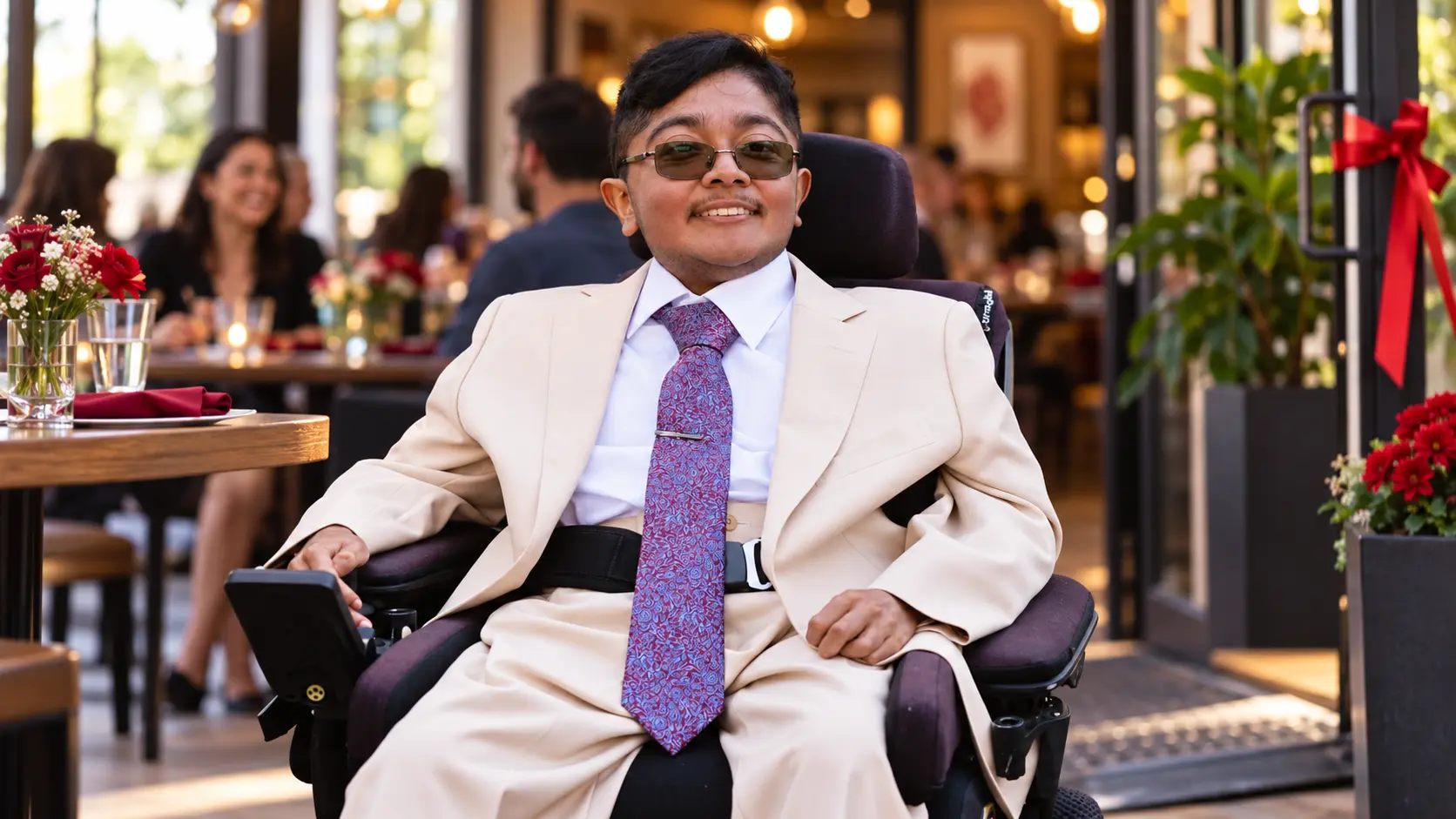
Access Changes Lives: How Tayjus Inspired DineAbiliti and a More Accessible Dining Experience
The Hidden Barrier of Restaurant Noise: How Quieter Dining Can Improve Accessibility